The Bank of England just raised rates to 4% — its first hike since 2023
On 5 November 2026, the Bank of England's rate-setters voted 8-1 to push Bank Rate up by 0.25 percentage points to 4%, the first increase since August 2023. UK bank shares had already been rallying into the decision. Here's what actually happened, and why a single percentage-point move from a committee most students have never heard of can ripple through the price of nearly every share on the market.
TL;DR: The Bank of England's Monetary Policy Committee raised Bank Rate by 0.25 percentage points to 4% on 5 November 2026, its first hike in over three years, with one member voting for an even bigger 0.5-point rise. The move follows disruption to energy supplies from conflict in the Middle East, which has pushed up fuel and utility costs and now has the Bank expecting UK inflation to reach around 5% by mid-2027. UK banking shares had already rallied ahead of the announcement, helping the FTSE 100 touch a three-month high earlier in the session, before wider market jitters over AI and data-centre stocks on Wall Street pulled European markets back down later that day.
What follows is the mechanism behind that headline — why a central bank raises rates at all, and why it moves prices across a market that has nothing obviously to do with borrowing costs.
What the Bank of England actually did
Bank Rate is the interest rate the Bank of England charges other banks, and it's the lever that eventually feeds through into mortgage rates, savings rates and the cost of business borrowing across the whole economy. On 5 November, the Monetary Policy Committee (MPC) — the nine-person panel that sets this rate roughly every six weeks — voted 8-1 to raise it from 3.75% to 4%. One member wanted to go further still, voting for a 0.5-point increase to 4.25%. It was the first time the Bank has raised rates, rather than holding or cutting them, since August 2023.
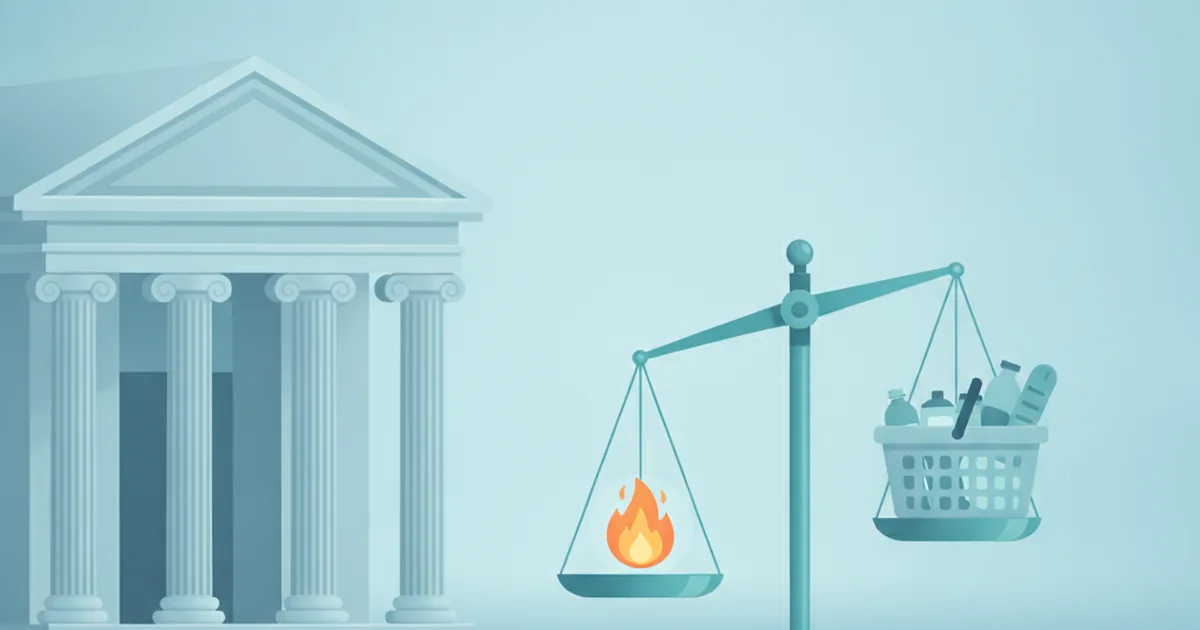
The trigger, according to the Bank's own policy summary, was energy. Conflict in the Middle East has disrupted the transport and supply of energy, driving up the price of oil and, with it, motor fuel and household utility bills in the UK. Policymakers now expect that pressure to push UK inflation up to around 5% by the middle of 2027 — well above the Bank's 2% target. If you want the full background on why the Bank cares so much about that target number, our explainer on what interest rates do to shares covers the basics, and it's worth reading alongside this one since that piece was written when the Bank was still holding, not hiking.
Why raising rates is meant to fight inflation
A higher Bank Rate makes borrowing more expensive everywhere it touches: mortgages, car loans, credit cards, and the loans businesses use to expand. When borrowing costs more, people and companies tend to spend less, which in theory cools down demand across the economy and takes some of the pressure off rising prices. It's a blunt tool, and it works with a lag of many months, but it's the main one the Bank has. Raising rates now, while inflation is still relatively contained, is the Bank's way of trying to stop the current energy-driven price pressure from spiralling into something harder to bring back down later.
Why bank shares moved before the decision even landed
UK banking stocks had already been climbing into Wednesday's announcement, and that rally helped push the FTSE 100 to a three-month high earlier in the session. The logic is fairly direct: banks make a large share of their profit from the gap between what they charge borrowers and what they pay savers, known as the net interest margin. When Bank Rate rises, that gap often widens, at least for a while, which is good news for bank earnings. It's a useful example of how a stock market can move on an event before it's officially confirmed — something we go into in more detail in how the news moves a price.
That early banking rally didn't hold the wider market up for long, though. Later in the same session, worries about AI and data-centre spending on Wall Street spread into European trading, and the FTSE 100 and wider European markets ended the day down around 0.4%. Two genuinely different stories — a UK rate decision and a US tech sell-off — collided on the same trading day, which is a reminder that share prices rarely move for just one reason at a time.
What a rate rise means beyond bank shares
| Who | Typical effect of higher rates |
|---|---|
| Banks | Often benefit, via a wider gap between lending and savings rates |
| Heavily indebted companies | Face higher interest costs on existing and new borrowing, squeezing profit |
| Housebuilders and retailers | Can see demand cool as mortgages and consumer credit get pricier |
| Savers and bondholders | Earn more on cash and new bonds, which can pull some money away from shares |
None of these effects are automatic or instant — they play out over months as the higher rate works its way through mortgage renewals, business loan refinancing and consumer spending decisions.
Behind the headline: the apps tracking all of this in real time
Within minutes of the Bank's announcement, the FTSE 100 level, individual bank share prices and currency rates were all updating on screens across the country — on trading apps, news sites and investor dashboards alike. Pulling a central bank's decision, market reaction and dozens of individual share prices into one clean, fast-loading page the moment the news breaks is a genuinely hard engineering problem, especially when traffic spikes the instant a rate decision lands. It's the kind of real-time data challenge that needs an experienced web development team that knows how to keep a data-heavy page fast and accurate under load, not just one that can build a page that looks good when nothing much is happening.
Frequently Asked Questions
Why did the Bank of England raise interest rates in November 2026?
The Bank's Monetary Policy Committee voted 8-1 to raise Bank Rate by 0.25 percentage points to 4%, pointing to conflict in the Middle East disrupting energy supply and pushing up fuel and utility costs. Policymakers said UK inflation is now expected to reach around 5% by mid-2027, and raising rates is the Bank's main tool for trying to slow that down.
Why does a higher interest rate affect share prices?
A higher Bank Rate makes borrowing more expensive for companies and consumers, which can slow spending and squeeze profits at firms that rely on debt or discretionary customer spending. It also makes safer assets like savings accounts and bonds pay more, which can pull some investor money away from shares. Banks, on the other hand, often benefit because they can charge more on loans than they pay on deposits.
Is this rate hike good or bad for UK bank shares?
Higher rates tend to widen the gap between what banks earn on loans and what they pay on deposits, which can support bank profits — one reason UK banking shares rallied ahead of the decision. That isn't a guarantee for any individual bank, though; a lot depends on bad debts, mortgage demand and how high rates eventually go.
The takeaway
A quarter-point move from a nine-person committee doesn't sound like much, but it reaches into mortgage bills, bank profits, housebuilder demand and the price of nearly every share on the market, through a chain of cause and effect that takes months to fully play out. The next time a central bank decision makes the headlines, the useful question isn't just "did rates go up or down," but "which companies gain from that, which lose, and how quickly."
This article is educational and is not financial advice, and nothing here is a recommendation to buy or sell any share. Details of the Bank of England's 5 November 2026 decision are as published in its own Monetary Policy Summary and Minutes and as reported by CNBC.
Learn it by playing it
Build a virtual £100,000 portfolio and see how a rate decision actually moves real share prices.
See how it works