How the Strait of Hormuz moved energy shares
One narrow shipping lane carries roughly one-fifth of the world’s oil. In August 2026, disruption there sent oil prices surging 5% in a single day and shook energy stocks on the FTSE 100. Here is what happened — and what it teaches you about geopolitical risk.
Most market-moving events involve company results, central bank decisions, or economic data releases. But occasionally something more dramatic enters the picture: a political dispute in a part of the world most students have never thought about suddenly sends oil prices surging and shifts the value of major shares on the London Stock Exchange. The Strait of Hormuz situation in August 2026 is one of those moments — and it is a textbook example of how geopolitical events create volatility.
What is the Strait of Hormuz?
The Strait of Hormuz is a narrow stretch of water connecting the Persian Gulf to the Gulf of Oman. At its narrowest point it is only around 33 kilometres wide. Despite its small size, it is arguably the single most important waterway in global energy markets.
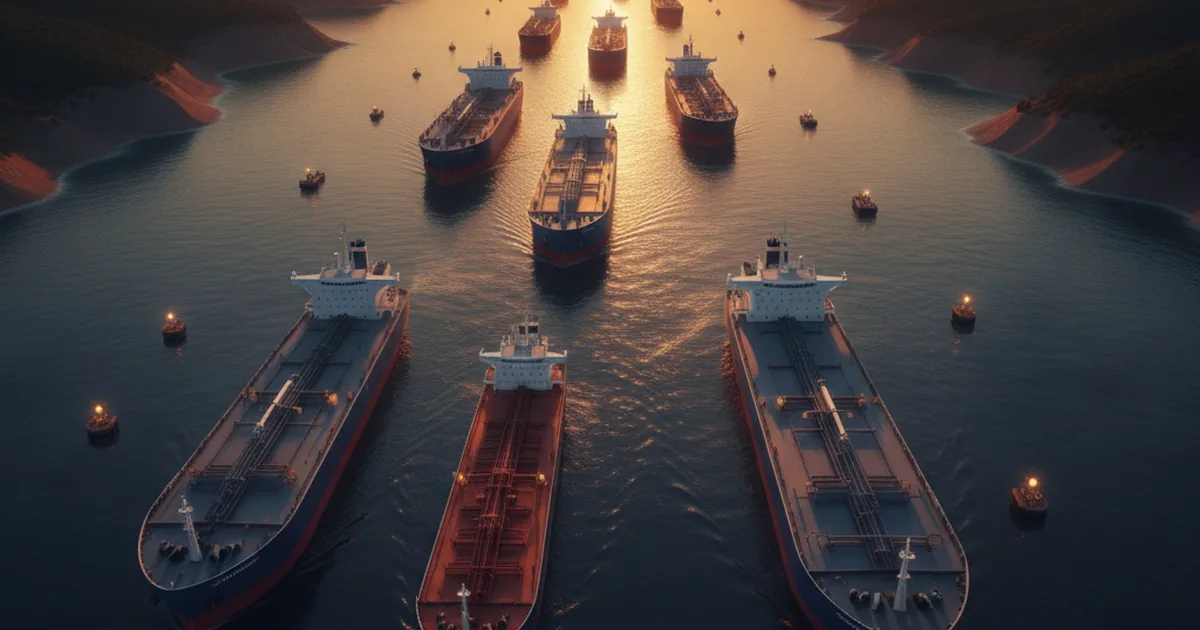
Before conflict disrupted shipping in early 2026, roughly 130 vessels passed through the strait every single day. These were largely supertankers carrying crude oil from the major oil-producing countries of the Gulf — Saudi Arabia, Iraq, Kuwait, the United Arab Emirates, and others — out to buyers in Europe, Asia, and beyond. The strait was the main exit route for around one-fifth of all the oil traded in the world.
When that route closes, or even when traders fear it might close, the effect on oil markets is immediate. You cannot easily reroute a tanker around Africa and maintain normal delivery schedules. Supply that was flowing freely suddenly cannot reach its destination on time. Prices react.
What happened in August 2026
The current disruption began when a military conflict broke out in late February 2026, effectively collapsing normal tanker traffic through the strait. By early August, only 8 to 15 vessels were crossing per day, compared with around 130 before the conflict began. That is a reduction of roughly 90%.
In June 2026 the United States and Iran signed a memorandum of understanding intended to reopen the strait to commercial shipping. But the deal quickly became complicated. Disagreements emerged over which routes vessels could safely use. Iran’s foreign ministry stated publicly in early August that the US would need to lift its naval blockade before Tehran would agree to fully open Hormuz: “As long as the US naval blockade continues, the necessary conditions for the reopening of the Strait of Hormuz do not exist,” an official spokesperson said.
On 10 August 2026, as doubt grew that any deal was imminent, oil prices jumped approximately 5% in a single trading session. US West Texas Intermediate crude futures closed at around $82.13 per barrel. Brent crude, the benchmark more commonly followed by European traders, rose by a similar margin. Both CNBC and Al Jazeera reported the price jump alongside the breakdown in negotiations that triggered it.
Why do oil prices move when a shipping lane is blocked?
The connection between a blocked strait and a higher barrel price comes down to simple supply and demand. Oil is not stored in infinite quantities at refineries around the world. It flows continuously through pipelines and ships from producers to processors to end users. Disrupt that flow and buyers cannot easily replace what they needed. If demand stays constant but supply looks threatened, prices go up.
There is also an additional factor that traders call a risk premium. Even if a conflict has not yet stopped oil flowing completely, the mere possibility that it might stop creates uncertainty. Traders who need oil in the future may pay slightly more today to secure it rather than risk being caught short. That extra amount — the risk premium — can be built into prices for months while a conflict continues, and it can spike sharply whenever negotiations appear to collapse, as they did in early August.
Our longer guide to why oil prices move the stock market explains the underlying mechanics in more detail, including how the same barrel of oil ultimately affects everything from airlines to manufacturers to your household energy bill.
How this affected energy shares on the FTSE 100
The UK stock market has an unusually large exposure to oil and gas companies. BP and Shell are two of the biggest companies in the FTSE 100 by market capitalisation, and both are highly sensitive to the oil price. When crude rises by 5% in a day, both companies are likely to earn more revenue from every barrel they produce — and share prices tend to reflect that almost immediately.
On 10 August 2026, BP shares were among the biggest risers on the FTSE 100, gaining around 7.4 pence per share. Shell also attracted attention from traders. The reason is not complicated: higher oil means higher earnings for oil producers, and markets adjust share prices to reflect expected future earnings. The same dynamic works in reverse when oil falls — energy stocks often lead losses on the FTSE 100 on days when crude weakens.
This creates a somewhat unusual feature of the UK market compared to other major indices. A rise in oil prices can push the FTSE 100 upward even on a day when the broader UK economy is doing poorly, simply because BP and Shell are large enough to drag the headline index higher. It is worth keeping this in mind when you read a headline that says “FTSE 100 closes up” — knowing why it is up matters as much as the fact that it is.
Who loses when oil rises?
Higher oil prices are not good for everyone. Understanding both sides of the coin is important for any investor — and it is a good example of why diversification protects you from single-sector swings.
| Sector | Effect of higher oil |
|---|---|
| Oil producers (BP, Shell) | Revenue rises; share price tends to rise |
| Airlines (IAG, easyJet) | Fuel costs rise; margins squeezed; shares often fall |
| Manufacturers & logistics | Energy and transport costs increase; profits pressured |
| Consumers | Petrol and energy bills rise; less money for other spending |
| Retailers | Supply-chain costs increase; consumer spending may slow |
This is why the FTSE 100’s response to an oil price spike can be mixed even within a single trading session: energy stocks surge while airlines fall, and the overall index lands somewhere between the two depending on which group is larger.
What is geopolitical risk, and why does it matter?
The Hormuz situation is a textbook example of what investors call geopolitical risk — the threat that political events such as wars, sanctions, or diplomatic disputes will disrupt economic activity in ways that are difficult to predict.
Financial models are good at pricing risk you can measure: you can calculate the probability of a company missing its earnings target, or estimate the effect of a 0.25% interest rate rise. Geopolitical events are harder, because you cannot easily assign a probability to whether a diplomatic negotiation will succeed in the next two weeks. That uncertainty is precisely what makes these situations so unsettling for markets.
The pattern that tends to emerge is a sharp burst of volatility when news breaks — prices move quickly as traders react — followed by a more gradual settling once the situation becomes clearer. If the Strait of Hormuz were to reopen fully and tanker traffic returned to normal, you would expect the oil risk premium to fade and the pressure on energy shares to ease. If the situation deteriorates further, the premium would likely grow.
What this means for your Student Investor portfolio
The Strait of Hormuz story is a reminder that your virtual portfolio does not exist in a bubble. Shares move because real things happen in the world: political decisions, military events, supply chain disruptions. Understanding the chain of cause and effect — Hormuz blocked → oil supply threatened → oil price rises → energy shares gain, airlines fall → FTSE 100 moves — is one of the most useful analytical habits you can build.
If you hold FTSE 100 energy companies in your portfolio, it is worth asking yourself how you would want to respond if the Hormuz situation resolved overnight and the risk premium disappeared from oil prices. What would that do to your holdings? Would you want to reduce your energy exposure, or hold on? There is no single right answer — but working through the question is precisely the kind of thinking the Challenge is designed to develop.
A note on this article
Nothing here is financial advice. The Student Investor Challenge uses virtual money specifically because real markets carry real uncertainty — geopolitical events like this one are a good demonstration of why. All investments in the Challenge are simulated, and the purpose is to learn how markets work, not to practise placing real trades.
FAQ
What is a risk premium in oil prices?
A risk premium is extra money built into a price to reflect uncertainty. When oil supply looks threatened, traders pay more per barrel than they otherwise would — a hedge against the possibility that supply actually falls short. The premium grows when the threat looks serious and shrinks when the situation eases.
Why do energy company shares follow oil prices so closely?
Oil companies earn revenue by selling oil. The price they receive for every barrel directly affects their profits, so when the oil price rises, expected earnings rise too. Markets price in those future earnings, which is why energy shares often move within minutes of a significant shift in crude.
Does a higher oil price always help the FTSE 100?
Not always. BP and Shell are large enough that their gains can lift the overall index, but airlines, manufacturers, and retailers face higher costs when oil rises and their shares often fall. The net effect on the FTSE 100 depends on which forces are stronger on a given day.
What is geopolitical risk?
Geopolitical risk is the threat that political events — wars, sanctions, diplomatic disputes — will disrupt economic activity. It is one of the hardest risks for markets to price because the timing and severity of events are unpredictable. Markets typically react with short bursts of volatility when news breaks, then settle once the situation becomes clearer.
Learn it by playing it
Build a virtual £100,000 portfolio and see how global events move your holdings.
See how it works