UK inflation hit 3.1% in August — what fuel prices and the Bank of England mean for investors
On 16 September 2026 the Office for National Statistics reported that UK consumer prices rose 3.1% in the year to August — the fastest pace in five months. The main culprit was fuel: petrol prices jumped sharply over the summer as global oil climbed above $100 a barrel. The same day, the Bank of England voted 6–3 to hold interest rates at 3.75%. Here is what happened and what it means for anyone managing a portfolio in the Student Investor Challenge.
Inflation is one of those words that crops up constantly in financial news, and for good reason: it touches everything from the price of filling up a car to the value of a company’s shares. If you want to understand why some shares rose and others fell on 16 September 2026, you need to follow the chain from a barrel of crude oil in the North Sea to the Monetary Policy Committee’s vote in London. Our inflation explainer covers the basics; this article uses August’s real data to show how the story plays out in practice.
What is the CPI and how is it measured?
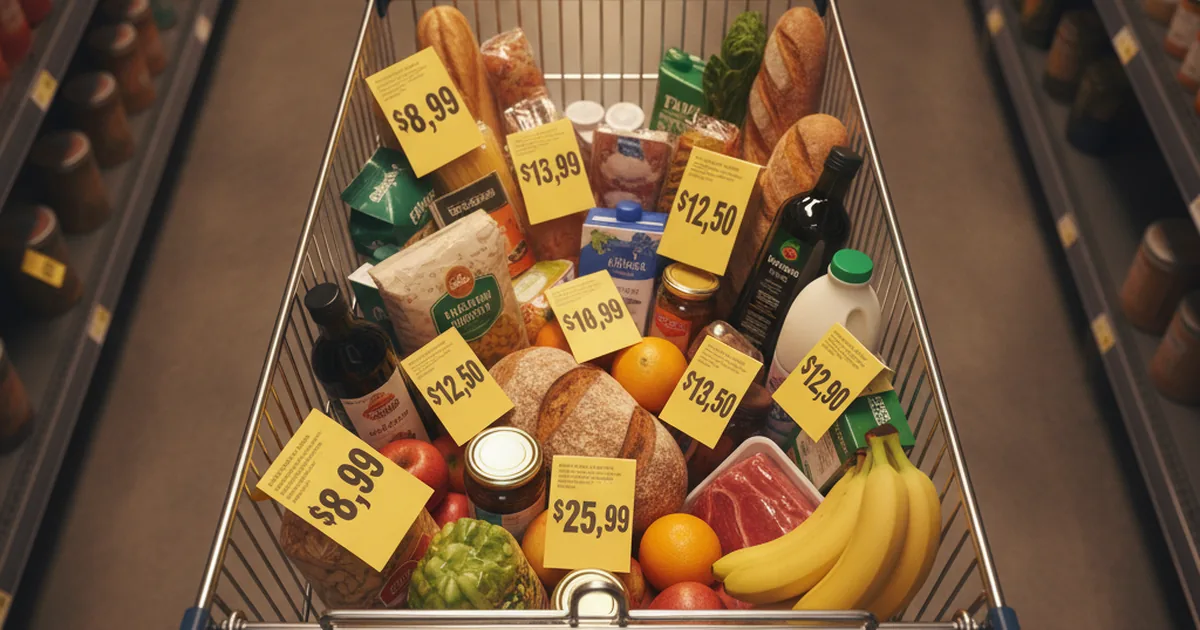
The Consumer Prices Index, or CPI, is the UK’s main measure of inflation. The Office for National Statistics (ONS) tracks the prices of around 700 goods and services — called the “basket” — every month. The basket includes everyday items such as bread, electricity, train tickets, and haircuts, but it also includes housing costs, clothing, and yes, petrol and diesel. When the overall price level of the basket rises, that is inflation. When it falls, that is deflation, which is relatively rare and carries its own problems.
A 3.1% CPI figure means that on average, things cost 3.1% more in August 2026 than they did in August 2025. In cash terms, if you spent £1,000 a year ago, the same things would cost you about £1,031 today. That sounds modest, but inflation compounds over time — and it affects different households very differently depending on how much they spend on the items that are rising fastest.
The ONS also publishes a second measure called CPIH, which includes an estimate of owner-occupiers’ housing costs. In August 2026, CPIH was 3.3% — slightly higher than CPI because housing costs were also elevated. The Bank of England targets CPI at 2%, so that is the number that drives its policy decisions.
Why did inflation rise to 3.1% in August?
The ONS data pointed to one dominant factor: motor fuel. Petrol and diesel prices surged 23% year-on-year in August, making motor fuel the single largest contributor to the overshoot above the 2% target. The arithmetic is stark: fuel alone accounted for roughly 0.7 of the 1.1 percentage points by which inflation exceeded the Bank’s target, according to the Bank’s own analysis.
The fuel price story
Why did fuel get so expensive? The chain starts with crude oil. Brent crude — the global benchmark — was trading near $106 a barrel in late August and early September 2026, up significantly from earlier in the year following supply disruptions in major producing regions. UK petrol rose by 9.1p per litre over just July and August, compared with just 0.3p over the same two months in the previous year. Diesel rose by 14.2p per litre versus 0.8p the year before.
When oil prices spike, the effect travels very quickly to the pump — usually within days. That immediacy is what made August’s CPI figure jump so fast. The energy price cap introduced by Ofgem, which we covered in our July inflation article, dampens the effect of gas and electricity price swings on household bills — but it does nothing to shield drivers from petrol pump prices, which move freely with the crude oil market.
What else contributed?
Beyond fuel, services inflation remained persistently elevated. This includes the price of things like restaurants, hotel stays, mobile phone contracts, and professional services. Services inflation is driven more by wage costs than by oil prices, which makes it stickier — harder to bring down quickly even when energy costs ease. Air fares also rose sharply in August, a seasonal pattern that was stronger than in previous years.
Food prices were a more neutral factor in August than they had been earlier in the year, having stabilised after the sharp rises seen in 2024 and 2025. That is a small piece of good news for households, but it was not enough to offset the fuel-driven jump in headline CPI.
Why did the Bank of England hold rates again?
The Bank of England’s Monetary Policy Committee (MPC) met on the same day the CPI data was released. Despite headline inflation rising to 3.1%, the committee voted 6–3 to hold the base rate at 3.75% — the sixth consecutive hold since the rate was cut to that level in December 2025.
The majority view, held by six of the nine members, was that the August spike was primarily energy-driven and therefore likely to be temporary. Their reasoning: if fuel prices stabilise or fall back, CPI will follow. Raising rates in response to a fuel-price shock would not bring petrol prices down; it would only add to the financial pressure on households and businesses already coping with higher bills. Interest rates affect borrowing costs for companies and mortgage holders alike, so an unnecessary hike carries real economic risk.
The 6–3 split explained
The three dissenting MPC members — Chief Economist Huw Pill, external members Catherine L. Mann and Megan Greene — voted to raise the rate to 4.00%. Their argument was different: even if fuel prices ease, services inflation remains persistently above where it should be for CPI to return to 2%. The longer the Bank waits, they argued, the more businesses and workers begin to expect continued above-target inflation, which feeds into higher wage demands and higher prices — a self-reinforcing cycle. Acting now is cleaner than being forced to act more aggressively later.
A 6–3 split is notable. When the vote was 8–1 or 7–2, markets could largely ignore the dissenters. A three-strong minority puts a rate hike firmly on the table for the next meeting. Markets interpreted the September decision as a near-certain hold with a meaningful probability of a hike in November.
What the Bank watches next
The MPC will be watching two things above all else before its November meeting: whether fuel prices ease as Brent crude cools, and whether services inflation shows any sign of coming down. If CPI is still above 3% when the October data is released, the hawkish minority is likely to pick up more support. The Bank has been very clear that it will not cut rates until it sees “sustainable” progress back toward 2% — and 3.1% is not that.
For context, the Bank’s hawkish hold policy has been a dominant theme in UK markets all year. Understanding it helps explain why gilt yields have been elevated and why property-sensitive shares have been under pressure throughout 2026.
What does this mean for different types of shares?
Inflation news does not move all shares in the same direction. The August CPI release was a classic example of a data point that created winners and losers in the same session. Here is the map:
Energy companies and commodity producers
The biggest winners from high oil prices are the companies that produce oil and gas. FTSE 100 names like BP and Shell see their revenues rise directly with the crude price, so Brent at $106 is good for their earnings. Mining companies that produce raw materials used in energy production — think copper, which is essential for energy infrastructure — also tend to benefit in a high-inflation, high-commodity-price environment. If you hold energy or mining shares in your Challenge portfolio, a fuel-driven CPI spike is generally a tailwind.
Banks and financial firms
Banks sit in an interesting position. Higher inflation usually means interest rates stay elevated for longer. Banks make money partly on the difference between the interest rate they pay on deposits and the rate they charge on loans — called the net interest margin. When rates are high, that margin often widens, boosting profits. A 6–3 vote with hawks pushing for 4.00% signals to the market that rates are not coming down any time soon, which is a relatively positive signal for bank earnings. High street lenders and insurers with large bond portfolios also benefit from higher yields on new investments.
Housebuilders, retailers, and indebted companies
The clearest losers from a high-rate, high-inflation environment are companies that rely on consumers spending freely and on cheap borrowing. Housebuilders face a double squeeze: higher mortgage rates reduce how much buyers can afford, dampening demand for new homes; and the cost of materials and labour remains elevated. Retailers are in a similar bind — their costs are high, but consumers with squeezed real incomes are more cautious about spending. Companies carrying significant debt face rising interest payments, which eat into profits. These sectors have been under pressure all year, and the September data did not change that picture.
What to watch next
There are several things to track in the weeks ahead:
- October CPI (released mid-November) — The next headline inflation figure. If it falls back below 3% as fuel prices ease, pressure on the BoE to hike will reduce. If it stays above 3%, November’s meeting becomes live.
- Brent crude oil price — The fuel-price story is fundamentally an oil-price story. A fall below $95 would take significant upward pressure off fuel CPI; a rise above $110 would add to it.
- Bank of England November meeting (5 November) — Markets will begin pricing the probability of a hike almost immediately. Watch gilt yields and the pound as a proxy for how the market sees it.
- Wage growth data — The ONS publishes regular jobs and earnings reports. If wage growth is still running at 5% or above, the hawks’ concern about services inflation will be hard to dismiss.
What this means in the Challenge
The August CPI release is a good reminder that macro data does not just move bond markets — it reshapes the relative fortunes of different sectors. Here are three habits worth building:
- Know which of your shares are oil-linked. Energy companies, airlines (as fuel buyers, not sellers), and petrochemical firms all have direct exposure to the oil price. When crude moves sharply, these companies move with it — sometimes by more than the oil price itself.
- Track the MPC vote split, not just the decision. A hold is not the same as a comfortable hold. A 6–3 split tells you the next decision is genuinely uncertain, and markets price that uncertainty into rate-sensitive shares immediately. The vote breakdown is always published in the minutes within two weeks.
- Use the ONS website as a primary source. The ONS inflation pages are free, detailed, and updated monthly. They break CPI down by component — food, transport, recreation, housing — which tells you far more than the headline number alone. When you can read the same data as the professionals, you make better-informed decisions in your portfolio.
Frequently asked questions
Why did UK inflation rise to 3.1% in August 2026?
UK CPI reached 3.1% in August 2026 largely because motor fuel prices surged 23% year-on-year, making fuel the single largest contributor. Petrol rose 9.1p per litre over July and August as global crude oil climbed above $100 per barrel. Services inflation also remained elevated, keeping headline CPI more than a full percentage point above the Bank of England’s 2% target.
Why did the Bank of England not raise rates in September 2026?
Six of the nine MPC members voted to hold rates at 3.75%, arguing the fuel-driven inflation spike was likely temporary. Raising rates would not bring petrol prices down, but it would increase mortgage costs and squeeze household budgets further. Three members — Huw Pill, Catherine Mann, and Megan Greene — disagreed and voted to raise to 4.00%, concerned that persistent services inflation risked becoming entrenched if the Bank waited too long.
How does rising inflation affect share prices?
The effect depends on the type of company. Energy producers and commodity firms tend to benefit because their revenues rise with raw material prices. Banks often gain from higher interest rates that accompany inflation, widening their lending margins. Housebuilders, indebted retailers, and growth companies typically suffer: higher borrowing costs reduce consumer spending, raise input costs, and compress valuations on future earnings. Inflation is rarely good or bad for “shares” in general — it reshuffles who wins and who loses.
What is the difference between CPI and CPIH?
CPI tracks the prices of a basket of goods and services bought by UK households. CPIH adds an estimate of owner-occupiers’ housing costs. In August 2026, CPI was 3.1% and CPIH was 3.3%. The Bank of England’s formal target is CPI at 2%, so CPI is the number that drives its rate decisions and financial news coverage.
Put the theory into practice
Manage a virtual £100,000 portfolio with real market prices — and see how inflation data moves the shares you hold.
See how it works