What a dividend actually is
Shares can make you money in two very different ways. One gets all the attention; the other quietly does a lot of the heavy lifting. This is the quiet one.
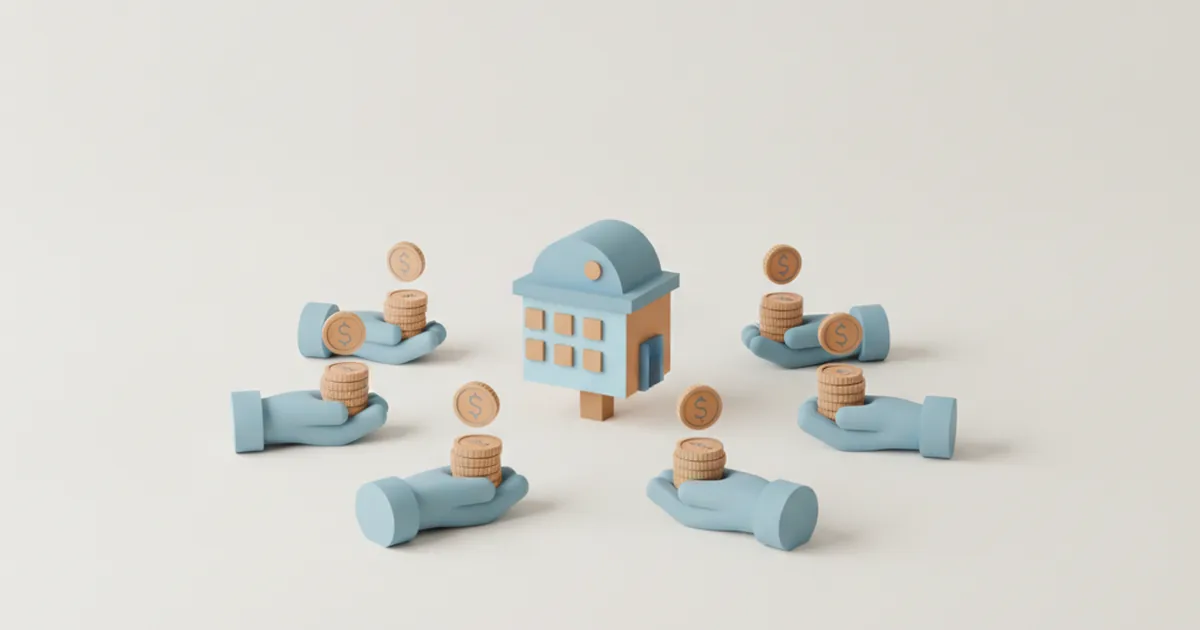
Ask most people how you make money from shares and they will say the same thing: you buy low and sell high. That is one way, and it is the one films are made about. But there is a second, calmer way that never makes the headlines — the company simply posts you a cheque, a few times a year, just for owning it. That payment is a dividend, and once you understand it, a big part of how grown-up investing works clicks into place.
It is one of those words that sounds like it belongs in a boardroom. It really does not. Strip away the jargon and a dividend is one of the most human ideas in finance: if you own a slice of a business and the business does well, you get a slice of the reward.
A dividend is your share of the profit
When you own a share, you own a tiny piece of a real company — not a token on a screen, an actual part of the business. If that company makes a profit over the year, its directors face a decision about what to do with the money. They can keep it inside the company to build new factories, hire people or pay down debt. Or they can hand some of it back to the owners — the shareholders — as a thank-you for putting up the money in the first place.
That handed-back portion is the dividend. It is usually quoted as an amount per share. If a company declares a dividend of 5p per share and you own 200 shares, you receive £10. Own 2,000 shares and you receive £100. The more of the company you own, the bigger your slice — which is exactly as it should be, because you own more of the thing that made the profit.
Think of it like a group of friends who chip in to buy a vending machine for the common room. At the end of term they count the coins inside. They could spend it all on a bigger, better machine — or they could split the takings between everyone who paid in, in proportion to what each person put down. Splitting the takings is a dividend. Buying the bigger machine is reinvesting. Neither is wrong; they are just different choices.
Why would a company give money away?
It can feel odd at first. Why hand cash to shareholders instead of keeping it? The answer is that a dividend is a signal as much as a payment.
A company that pays a steady, reliable dividend year after year is quietly saying, we are making real profit, and we are confident enough to share it. That reassures the people who own it. Big, mature businesses — think supermarkets, banks, utilities — often can’t double in size any more, so rather than pile up cash they have no use for, they return a chunk of it to the owners. For a lot of investors, especially people living off their savings in retirement, that regular income is the whole point of owning shares at all.
The flip side matters just as much. A young, fast-growing company — a tech firm still building its first products — will usually pay no dividend. Every pound of profit is far more useful ploughed back into growth than posted out to shareholders. That is not stinginess; it is ambition. So a missing dividend is not automatically a red flag. It often just tells you which stage of life the company is in.
The two ways a share pays you
This is the idea worth locking in, because it changes how you judge whether an investment did well. A share can reward you through two separate channels:
- Capital growth — the share price rises, so the slice you own is worth more than you paid. You only actually pocket this if you sell.
- Dividend income — cash paid to you while you simply hold the share, whatever the price is doing that week.
Add the two together and you get what professionals call the total return — the honest measure of how an investment treated you. A share whose price barely moved all year can still have been a decent holding if it paid a healthy dividend along the way. Judging a company on its share price alone is like judging a job on its salary while ignoring the bonus.
Dividend yield: comparing like with like
A dividend of “5p a share” means very little on its own, because you don’t know what the share costs. Paying 5p on a share worth 100p is generous; paying 5p on a share worth 5,000p is barely a rounding error. To compare fairly, investors use the dividend yield.
The maths is friendlier than it looks. Take the total dividend paid in a year, divide it by the share price, and turn it into a percentage:
- Share price: 200p
- Yearly dividend: 8p
- Yield: 8 ÷ 200 = 0.04, or 4%
Now you can line up two totally different shares and see which pays more income for every pound you put in. A word of caution, though: a sky-high yield is not automatically a bargain. Sometimes a yield looks huge only because the share price has crashed on bad news — and a company in trouble may cut or cancel the dividend entirely. A big number is a reason to ask why, not a reason to celebrate.
The dates that trip people up
Dividends come with a little calendar of their own, and one date in particular confuses almost everyone the first time. Here is the sequence, in plain order:
- Declaration date — the company announces it will pay a dividend, and how much.
- Ex-dividend date — the cut-off. To get the payment, you must already own the share before this day. Buy on or after it and this round’s dividend goes to the previous owner.
- Record date — the company checks its books to see who the registered owners are.
- Payment date — the money actually lands, often weeks later.
Here is the part that catches beginners out. On the ex-dividend date, the share price usually falls by roughly the size of the dividend. It looks alarming, as if the market suddenly soured on the company. It hasn’t. The share simply no longer carries the right to that upcoming payment, so it is worth a touch less — you can’t buy the share and claim a dividend that’s already been promised to someone else. It is bookkeeping, not bad news. Knowing this stops you panicking, and it links neatly to our note on how the news actually moves a share price: not every price drop means something went wrong.
What about in the Student Investor Challenge?
In the Student Investor Challenge your focus is on buying and selling shares to grow a virtual £100,000 portfolio, so day-to-day the price moves are what you will watch most closely. But dividends are still worth understanding while you play, for two reasons.
First, they explain the mysterious little dips. When a share you own edges down on its ex-dividend date, you will now know it is routine, not a sell signal — exactly the kind of calm reading we talk about in how to read a share price without panicking. Second, they shape how real investors pick companies, which is the mindset the game is trying to build. Plenty of the steadiest performers in a portfolio are dull, dependable dividend payers rather than the exciting names everyone is talking about — a theme that runs right through what a portfolio really is.
The one thing to remember
Owning a share makes you a part-owner of a business, and part-owners share in the profit. That is all a dividend is. It won’t make you rich overnight — the headline gains come from prices — but understanding it changes the questions you ask. Instead of only wondering “will this price go up?”, you start asking “is this a real, profitable business that shares its rewards?” That is a far more grown-up question, and it is the kind that quietly wins over the long run.
FAQ
Do all companies pay dividends?
No. Many large, settled companies pay a regular dividend, but plenty of younger or fast-growing firms pay nothing and reinvest every penny of profit instead. A missing dividend is often a sign of ambition, not weakness.
How often are dividends paid?
In the UK most payers pay twice a year — a smaller interim dividend partway through, and a larger final one after the annual results. Some pay quarterly, and a few add a one-off special dividend after an unusually good year.
Why does a share price drop on the ex-dividend date?
Because the right to the next payment is stripped out of the shares that day. A buyer no longer receives the upcoming dividend, so the share is worth roughly that much less. It is an accounting adjustment, not the market turning against the company.
What is a dividend yield?
The yearly dividend divided by the share price, shown as a percentage. A 200p share paying 8p a year yields 4%. It lets you compare the income from very differently priced shares on one scale.
Learn it by playing it
Build a virtual £100,000 portfolio and see how real companies behave.
See how it works