Why a Chilean storm hit FTSE 100 mining shares
On 13 August 2026, Antofagasta — one of the FTSE 100’s biggest copper miners — cut its annual output forecast after extreme weather shut down one of its Chilean mines. Its shares fell 5% and dragged the wider mining sector with them. Here is what happened and what it teaches you.
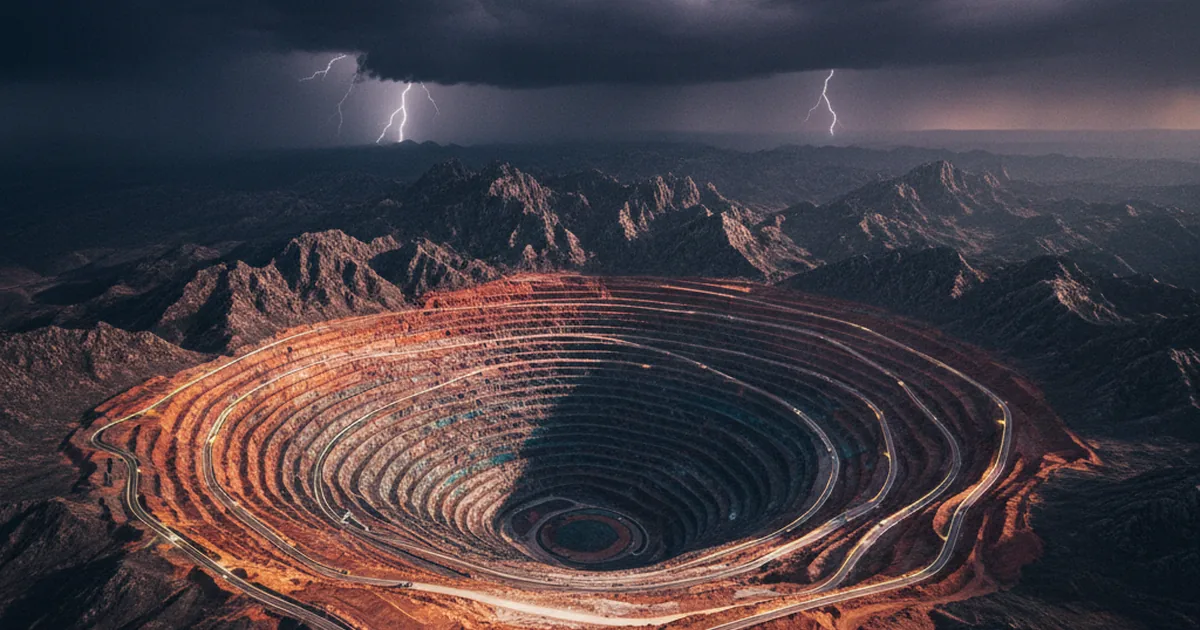
Markets move on events around the world — not just on earnings announcements or interest rate decisions, but on floods, droughts, earthquakes, and storms. In August 2026, a series of extreme weather events in northern Chile illustrated that chain of events as clearly as any textbook could. A mine went down. A company cut its forecast. Shares in London fell. And the whole episode compressed a powerful investing lesson into a single news day.
Understanding what happened — and why it mattered — will help you read similar situations whenever they arise, whether you are taking part in the Student Investor Challenge or following markets as an adult investor years from now.
Who is Antofagasta?
Antofagasta plc is a mining company listed on the London Stock Exchange and a member of the FTSE 100. Despite being headquartered in London, almost all of its business is in Chile, where it operates several large copper mines. The company is named after the Antofagasta region in northern Chile, one of the most copper-rich areas on the planet.
Antofagasta is one of the world’s most significant copper producers. It measures its output in hundreds of thousands of tonnes of copper per year. Going into August 2026, the company had guided investors to expect between 650,000 and 700,000 tonnes of copper production for the full year. That guidance is important: it is the number analysts and investors use to build their profit forecasts.
In early August, storms struck the Coquimbo region of Chile, where Antofagasta’s Los Pelambres mine is located. The weather was severe enough that the Chilean government declared a state of catastrophe in the region. The mine was forced to suspend operations. When Antofagasta returned to the market on 13 August 2026 with an update, it had cut its annual production guidance to between 625,000 and 655,000 tonnes — a reduction of up to 45,000 tonnes at the top end of its previous range, according to Proactive Investors.
The market responded immediately. Antofagasta’s shares fell roughly 5%, to around 3,835p, in London trading. The FTSE 100 closed down 0.6%, touching its lowest level in nearly three weeks, with Antofagasta among the biggest fallers. The FTSE 350 industrial metal miners index dropped more than 3% on the same day, according to Global Banking & Finance.
What is copper and why do investors care about it?
Copper is not a glamorous metal. It does not make jewellery or sit in central bank vaults the way gold does. But it is arguably more important to the modern economy than any other commodity, because it is everywhere in the physical infrastructure of daily life.
Every electrical wire in a building contains copper. Every motor in a washing machine, every circuit board in a laptop, every transformer on a electricity pylon relies on it. In the shift towards electric vehicles and renewable energy, demand for copper is only growing: a single electric car contains roughly four times as much copper as a traditional petrol car, and a wind turbine can require several tonnes of it. The Grantham Research Institute at LSE has written extensively about how the green energy transition will require sustained increases in industrial metal supply for decades.
This is why investors, economists, and commodity traders pay close attention to copper prices. It is often called “Dr Copper” — a nickname that reflects the belief that copper prices signal the health of the global economy. When factories are busy, construction is booming, and consumers are spending on electronics and appliances, copper demand is high and prices tend to rise. When economic activity slows, copper often falls first.
In August 2026, copper was trading near record highs of around $14,300 per tonne, partly because of strong demand and partly because supply outside the United States had been tightening. That backdrop is relevant context for why an output cut news got so much attention.
The chain from mine to market
When investors heard that Antofagasta was producing less copper than expected, they followed a very simple chain of logic:
- Less copper produced → Antofagasta has fewer tonnes to sell
- Fewer tonnes sold → lower revenue than previously forecast
- Lower revenue → lower operating profit
- Lower profit → shares are worth less than previously believed
- Shares worth less → investors sell, price falls
Notice that this logic does not require copper prices to fall. Even if copper remained at $14,300 per tonne, Antofagasta would generate less revenue simply because it had fewer tonnes to sell. The problem was on the volume side, not the price side. That is an important distinction for a Challenge player to understand. When you are evaluating a mining or commodity company, the share price depends on both the commodity price and how much of it the company can actually produce.
This same chain of reasoning explains why investors follow commodities so carefully. A mining company’s profits can change dramatically based on events it cannot control: the weather, geological conditions underground, labour disputes, government regulations, or changes in energy costs. All of these affect how much metal actually comes out of the ground.
Why the whole mining sector fell
One of the most striking aspects of the day was that Antofagasta was not the only mining company whose shares fell. The broader FTSE 350 mining sector dropped more than 3%, and other miners with no connection to Chile or to Los Pelambres also lost ground.
This is a feature of how stock market sectors work. Companies within the same sector tend to move together, especially on days when there is a specific sector-level news event. Part of this is rational: if Antofagasta is producing less copper, the market for copper is marginally tighter, which might affect expectations for other miners too. But part of it is also a momentum effect — investors who hold a basket of mining stocks sell the whole basket when one of the major names gets bad news, simply to reduce their overall exposure.
For someone playing the Student Investor Challenge, this sector correlation is worth understanding. If you are overweight in a single sector — say, you have chosen three mining companies — a bad day for one miner can hit your whole portfolio. This is exactly why diversification is such a central idea in investing: spreading your holdings across different sectors means you are less exposed to any one industry’s bad day.
It also shows how a small number of large companies can influence a whole index. Antofagasta is one of the bigger names in the FTSE 100, and its 5% fall on 13 August was a meaningful drag on the index’s overall performance that day.
Did copper’s record high protect Antofagasta?
You might reasonably ask: if copper prices were near all-time highs, should that not have cushioned the blow? And yes, the situation would have been worse had copper been falling as well. But a high copper price cannot fully compensate for a significant production shortfall. If a company was going to sell 700,000 tonnes and now expects to sell perhaps 640,000 tonnes, that is roughly 60,000 fewer tonnes of revenue — at $14,300 per tonne, a very large sum regardless of whether prices are high or low.
This illustrates a more general principle. It is tempting to invest in a commodity company simply because the commodity price looks attractive. But the investment case for a mining company also depends on its ability to deliver on its production plans, the age and quality of its mines, its operating costs, and the political and geographic risks of where it operates. A company mining in a region prone to extreme weather, labour unrest, or political instability carries risks that a raw commodity price chart cannot capture.
What this means for your portfolio in the Challenge
The Student Investor Challenge gives you a virtual £100,000 portfolio to invest across real companies listed on the London and New York stock exchanges. Events like the Antofagasta output cut are exactly the kind of thing that can move a share in your portfolio by 4% or 5% in a single session — and you will not always be able to predict them.
The practical lessons here are straightforward. First, when you choose a mining or commodity company, look past the commodity price and think about the company’s specific operational risks. Where are its mines? What is its production track record? Has it revised guidance before? Second, consider how much of your portfolio is in any one sector. Third, remember that some share price moves are driven by events that no analysis could have predicted — a storm in Chile, a flood in Indonesia, an earthquake in a mining region. These are called exogenous shocks, and managing exposure to them is part of what being a thoughtful investor means.
If you are not already registered for the Challenge, take a look at how the portfolio and rules work to get started. Tracking real events like the Antofagasta story against your own portfolio decisions is one of the best ways to learn.
Summary: what the Antofagasta storm taught investors
| What happened | What it means |
|---|---|
| Storms in Chile forced Los Pelambres to halt production | Geographies and weather are real investment risks |
| Annual copper output guidance cut by up to 45,000 tonnes | Volume matters as much as commodity price for a miner’s revenue |
| Antofagasta shares fell 5% on 13 August 2026 | Markets price in lower expected profits immediately |
| FTSE 350 mining sector fell over 3% | Sector correlation means one company’s news can hit many shares |
| FTSE 100 closed 0.6% lower | Large FTSE constituents move the whole index |
Frequently asked questions
What is copper used for?
Copper is used in electrical wiring, plumbing, motors, and electronics. It is also a key material in electric vehicles and renewable energy infrastructure — wind turbines and solar panels both require large amounts of it. This broad industrial demand is why copper is considered one of the most important commodity markets in the world.
What does a production guidance cut mean?
A production guidance cut is when a company tells investors it will produce less than it previously promised. For a mining company, it means fewer tonnes of metal will be dug out of the ground that year. Less metal means lower revenue and lower profits, so investors typically sell shares in response, pushing the price down.
Why do mining stocks move together?
Mining stocks tend to move together because they share the same fundamental driver: commodity prices. Even when one miner has company-specific bad news, the whole sector often moves as investors reassess their overall exposure. This is called sector correlation, and it is one of the key reasons diversification across sectors matters in a portfolio.
What is the FTSE 350 Mining Index?
The FTSE 350 combines the FTSE 100 and FTSE 250, covering the 350 largest London-listed companies. Mining companies within it are grouped into a sector sub-index. When commodity prices fall or a major miner cuts output, this sub-index can move by several percentage points in a single session — far more than the broader market. You can explore more about how indices like the FTSE 100 are constructed in our article on what a stock market index is.