Why Investing Apps Keep Adding New Features
Your bank's app probably looks almost exactly the same as it did last year. Your investing app, meanwhile, seems to get a new chart, a new notification setting or a new widget every few weeks. That's not an accident, and it's not because investing apps are trying harder to impress you — it comes down to how the teams behind them build and release software.
TL;DR: Investing apps update so often because small, safe releases are cheaper than big mistakes — teams ship a change to a few users first, check nothing breaks, then switch it on for everyone. Banks don't need to move at that speed because their core product changes far less often. Behind the scenes, this pace of shipping is also why fast-growing finance apps frequently bring in extra specialist developers to keep up with it.
If you've ever opened your investing app and noticed something new — a redesigned graph, a different way of seeing your portfolio, a fresh notification setting — while your bank's app has looked untouched for a year, you're not imagining it. The two kinds of apps are built, tested and released by very different processes, and understanding that difference tells you a lot about how modern software actually gets made.
Shipping that many small changes, that often, takes more engineering hands than most people assume. Fast-moving fintech teams frequently can't hire and train enough in-house developers quickly enough to match the pace they want, so many of them bring in a staff augmentation team — extra specialist developers who slot in alongside the core team for exactly this kind of high-frequency release work, without the company needing to go through months of hiring first.
What Does "an Update" Actually Mean?
Not every update is the same size, and lumping them all together is part of why the pace can feel confusing. Roughly speaking, app updates fall into two different buckets.
Cosmetic Changes vs Real New Features
Some updates are purely cosmetic: a slightly different icon, a refreshed colour on a button, a tidier layout for a screen you already use. These are quick to make and low-risk, because they don't touch how the app actually calculates or stores anything.
Other updates are genuinely new functionality working under the surface — a new way to view your portfolio's performance over time, a new type of price alert, a feature that lets you compare two holdings side by side. These take real engineering work: new code, new data being tracked, new ways for that data to be displayed safely and accurately. It's this second kind of update, the real feature work, that explains most of the release activity you notice.
Why Finance Apps Update More Than Your Bank App
This isn't a difference in ambition; it's a difference in how each type of company is built and incentivised to operate.
Traditional banks, especially large ones, often release app changes only a handful of times a year. Their core product — holding your money safely, moving it between accounts — doesn't need to change often, and big, infrequent releases let them test everything thoroughly before anything goes live. Independent fintech and investing apps work under different pressure: they're usually newer, smaller companies competing hard for attention, and they need to prove they're improving constantly to keep users engaged and ahead of rivals.
The Australian neobank Up is a well-documented real-world example of just how wide this gap can get: where many traditional banks might ship app updates a few times a year, Up has described releasing changes to production multiple times a day. That's not a typo or an exaggeration — it's the result of a deliberately engineered process called continuous delivery, which is built specifically to make frequent, small releases safe rather than risky.
There's also a competitive and regulatory angle here. Financial technology companies face constant pressure from both rivals and changing rules, and industry reporting on financial-sector software teams has pointed to exactly this combination — competitive pressure plus the need to respond to new requirements quickly — as a key reason finance companies have leaned so heavily into fast, frequent software delivery rather than the slower release cycles that were once standard across the industry.
How Does a New Feature Go Live Without Breaking the App for Everyone?
The obvious worry with shipping changes this often is: doesn't that risk breaking things constantly? In practice, teams have built a specific technique to avoid exactly that problem.
Feature Flags: Turning a Feature On for a Few People First
It's called a feature flag, and the idea is simpler than the name suggests. When engineers finish building a new feature, they don't switch it on for every single user at once. Instead, the code for the new feature is shipped to everyone's phone already, but it stays "switched off" behind a flag. The team then turns that flag on for a small group of users first — sometimes just a few hundred people, or users in one region — and watches closely to see whether anything behaves unexpectedly.
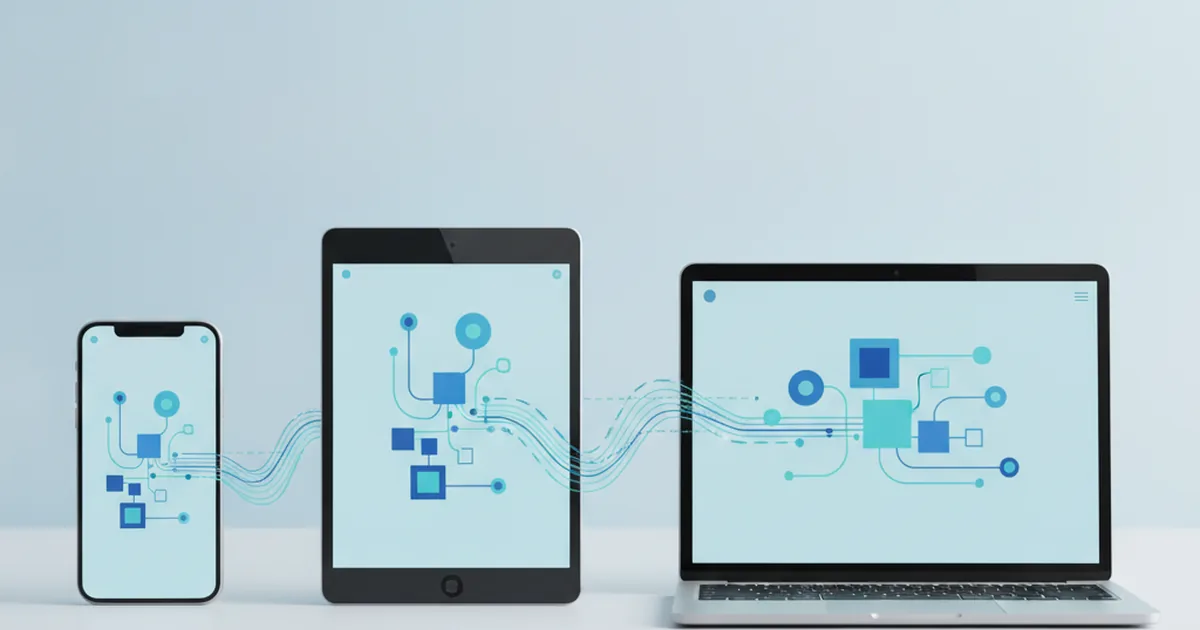
If everything looks healthy, more users get the flag switched on, in stages, until eventually everyone has it. If something goes wrong, the team can simply switch the flag back off, instantly, without having to push out an entirely new version of the app to fix it. This is exactly why you sometimes notice a friend has a feature on their investing app that you don't have yet: you're both running the same underlying app, just with different flags turned on.
Why This Pace Needs Extra Hands on the Team
Running dozens of small, carefully tested releases a month, instead of one big release a year, isn't free. It requires more people writing code, more people reviewing it, and more people monitoring what happens after each flag gets switched on. For a fast-growing investing app trying to keep pace with competitors, that can mean needing significantly more developer capacity than the core team currently has.
Hiring permanent engineers takes months, and demand for this kind of work often spikes around a specific feature or a specific product push rather than staying constant all year. That mismatch is a big part of why staff augmentation has become such a common pattern in fast-moving fintech teams: a company brings in experienced developers on a temporary, flexible basis to help ship a particular wave of features, then scales back down once the core team has absorbed the new work, rather than carrying permanent headcount it may not need six months later.
What This Means for You as a Student Investor Player
Once you understand what's actually happening behind an update, the changelog in your app store stops being a wall of jargon and starts being useful information.
- A long changelog isn't a red flag. It usually signals an active, well-resourced engineering team, not an unstable one.
- Features arriving unevenly is normal. If a friend has something you don't yet, it's probably a feature flag still rolling out, not a bug on your account.
- Look for "what changed," not just "bug fixes." Apps that describe specific new functionality, rather than vague maintenance notes, are usually the ones actively investing in their product.
That same habit of reading carefully and not jumping to conclusions from a single data point is exactly the mindset the Challenge is designed to build. When you're tracking a portfolio that behaves identically everywhere you check it, you're relying on the same kind of careful engineering discipline described above. And if you've ever wondered how investing apps actually make money to fund all of this ongoing development, that's a closely related question worth exploring next. In the meantime, you can put the same patient, evidence-based thinking to work by tracking your rank in the Portfolio League as your own virtual portfolio develops.
Quick FAQ
Does a new update mean my portfolio data could be affected?
Almost never in a way you'd notice. Reputable investing apps test updates on a small slice of users first and watch closely for anything going wrong with accounts or balances before switching the update on for everyone. Your portfolio data itself is stored and backed up separately from whatever new feature is being tested.
Why does my app sometimes show a feature my friend doesn't have yet?
That's usually a feature flag at work. The company has already shipped the code for the new feature to everyone's phone, but it's only switched on for a smaller group first, so engineers can check it behaves properly before turning it on more widely. Your friend will likely see it within days or weeks.
Is frequent updating a sign the app is unstable?
It's usually the opposite. Frequent, small updates are generally a sign of a mature engineering process, where each change is tested in isolation and rolled out carefully. Apps that update rarely aren't necessarily more stable; they may simply be built, or resourced, in a way that makes shipping changes slower and riskier.
This article is educational and is not financial advice. It does not promote or recommend any specific broker, app or company.
Learn it by playing it
Build a virtual £100,000 portfolio and track your ranking securely on any phone — the Challenge works the same on iOS and Android.
See how it works